How to use a swivel knife
How to hold a swivel knife, how deep to cut, how to steer a smooth curve, and how to keep the blade sharp.
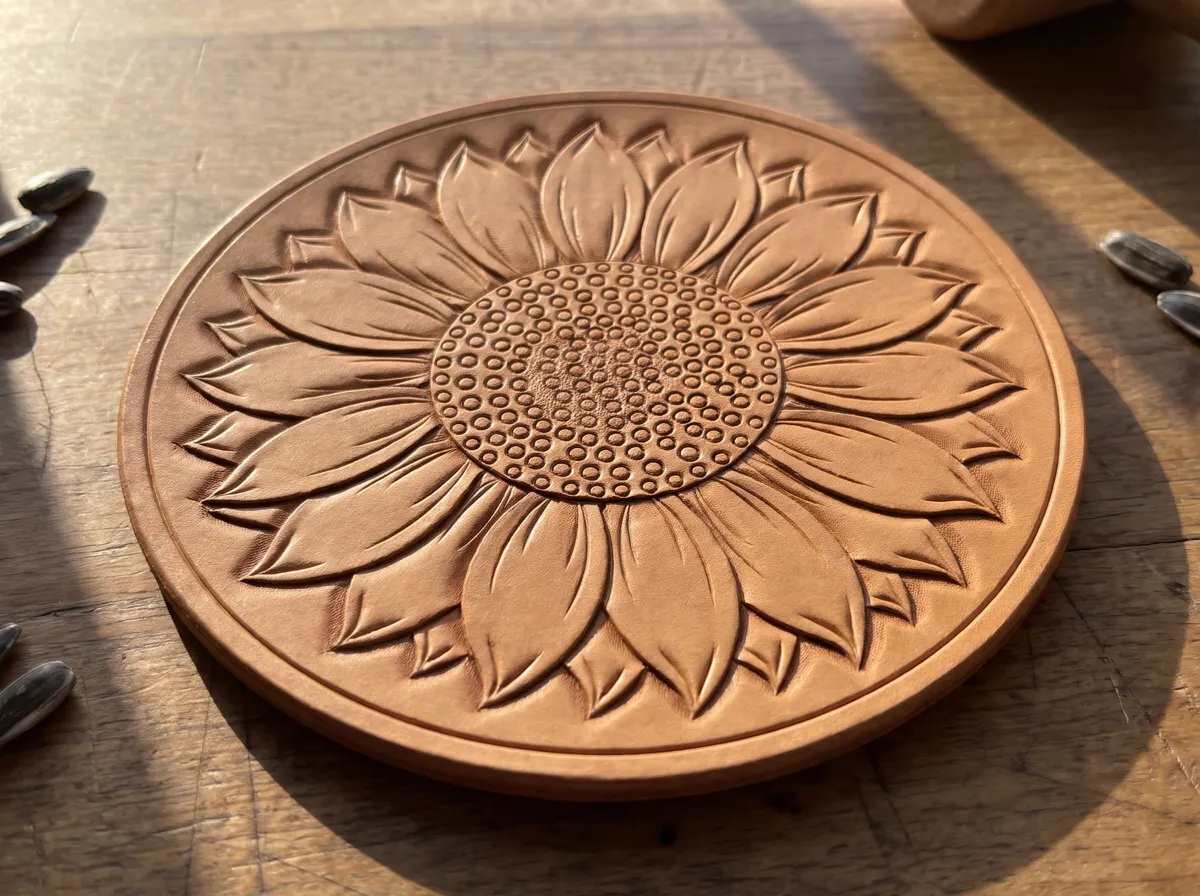
The swivel knife cuts the lines that every other tool works against. A beveler follows the cut, and a clean cut gives you a clean bevel. Most people find it awkward for the first few hours, because it steers by rotating the barrel with your fingers while your hand moves forward, which no other everyday tool asks you to do.
How to hold it
Rest your index finger in the curved yoke on top. Hold the barrel between your thumb and your middle finger, and let your ring finger and little finger rest on the leather to steady your hand. Your index finger presses down to control depth; your thumb and middle finger turn the barrel to steer. Tilt the knife slightly towards you so the corner of the blade does the cutting.
How deep to cut
A common guide is about half the thickness of the leather. Shallower cuts make for a flat bevel and little relief; deeper ones weaken the leather and can cut through on thin pieces. Keep the depth even along a line. Many carvers taper the cut at the end of a line, easing pressure off so the line fades out instead of stopping abruptly.
Cutting curves
- Start at the far end of the line and pull the knife towards you.
- Move your whole hand forward at a steady pace, and turn the barrel as the line curves. You steer by turning the barrel, so your wrist should not twist.
- Turn the leather when you need a better angle. Most carvers rotate the work constantly so they are always pulling the knife in a comfortable direction.
- Cut each line in one smooth pass where you can. Going back over a cut widens it and makes a ragged edge.
Where two lines meet, stop the second cut at the first one. If you cross lines, the knife leaves small marks in the element on the far side that will show after beveling.
Keeping the blade sharp
A sharp blade glides through cased leather with light pressure. A dull one drags, tears the grain and wanders off the line. Strop the blade every few minutes of cutting: hold it at its bevel angle and pull it backwards along a leather strop loaded with polishing compound, several times on each side. A blade that no longer recovers with stropping needs honing on a stone first.
Decorative cuts
The small curved cuts inside leaves and petals are made last, after beveling and shading. They are shallow, quick and freehand, and they give floral work much of its movement. Practise them on scrap until they flow, because one hesitant decorative cut is easy to see on a finished piece.
Next step
Once the lines are cut, bevel along them to give the design depth.